
Key benefits of our ventilation systems for poultry:

Air quality
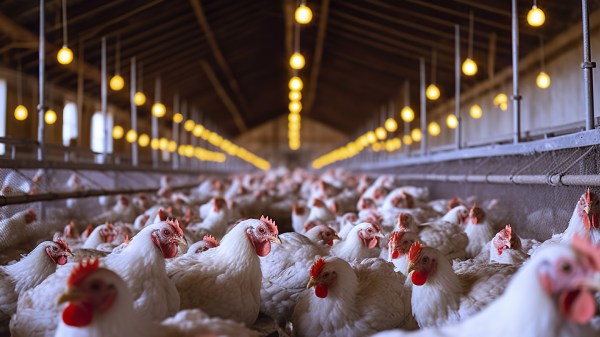
Promote healthy flocks by reducing harmful concentrations of CO₂, ammonia, and dust. Our precision-controlled minimum ventilation systems ensure optimal air exchange while minimizing energy costs for heating and airflow.

Heat stress prevention
Heat stress can drastically affect feed conversion and increase mortality. Our advanced tunnel ventilation solutions maintain optimal temperatures during peak heat, protecting flock performance without driving up energy usage.

Litter quality
Wet litter contributes to leg issues and health problems. Our systems support dry, balanced environments through smart airflow strategies, improving litter conditions and animal welfare.

Operational efficiency & ROI
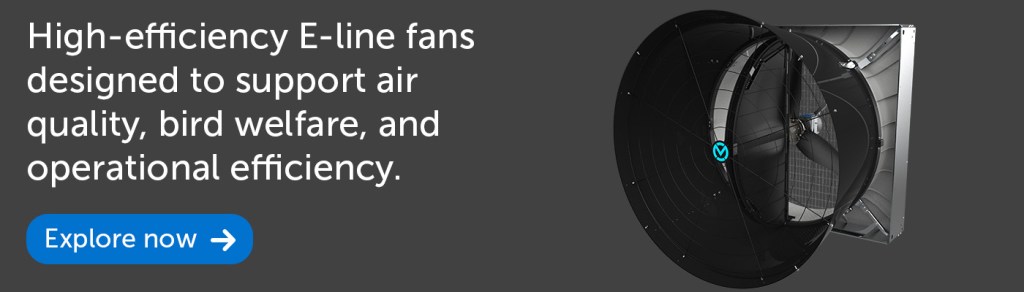
Every detail matters. Our E-line fans and intelligent ventilation controls are engineered to maximize performance, minimize energy costs, and deliver measurable results across your entire production cycle.
Discover our ventilation strategies
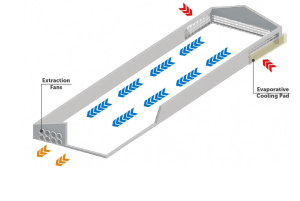
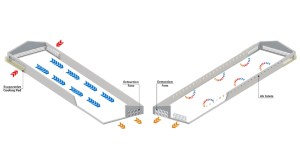
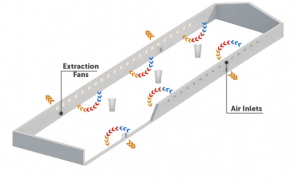
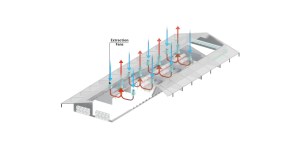
Your challenges, our expertise
Explore our climate solutions
Heating
Cooling

Air treatment
FAQ
Find answers to the most common inquiries about ventilation in poultry, system performance, and how to choose the right solution for your farm.
What are the signs of poor ventilation in a broiler or layer house?
Common signs of inadequate ventilation include:
- Stale or musty air
- Uneven bird distribution
- High ammonia levels
- Excess humidity
- Dust buildup
- Inaccurate or inconsistent sensor readings
Addressing these issues early helps protect bird health and performance.
How can I reduce energy costs for ventilation and heating in my poultry house?
Installing variable-speed E-line fans allows precise airflow control, helping reduce electricity usage for both ventilation and heating. Explore our real-world case studies to see how farmers have achieved measurable energy savings — or contact our technical team to calculate your potential savings.
How can I improve bird distribution in my poultry house?
Proper bird distribution depends on balanced ventilation and heating. Optimizing your minimum ventilation strategy and ensuring even heat distribution encourages birds to spread uniformly, improving welfare and performance.
What is the “wind-chill effect” in poultry ventilation?
The wind-chill effect refers to the cooling sensation birds experience when air flows over their bodies. This airflow helps dissipate excess body heat and is especially effective when combined with evaporative cooling, reducing heat stress in hot climates.
What are common mistakes in poultry house ventilation?
Common errors include:
- Poor airtightness: leaky farms prevent proper airflow and create drafts.
- Inadequate minimum ventilation: leads to excess CO₂, ammonia, and humidity.
- Improper inlet management: blocked or misaligned inlets reduce air mixing.
- Neglected fan maintenance: dirty or worn fans lower performance and raise energy costs.
- Ignoring bird behavior: sensors are helpful, but visual checks are essential.
- Misplaced sensors: incorrect placement gives false readings.
- Overusing wind-chill on young birds: high airflow can chill chicks in cold weather.
- Poor insulation: causes heat loss, condensation, and high energy bills.
- Airflow obstructions: equipment or structural issues can create stagnant zones.
Avoiding these mistakes improves animal welfare and farm profitability.