
Broiler production systems that are used all over the world create a need for flexible and reliable ventilation solutions. When mentioning flexibility, the one thing that should not be flexible or random is the cost of running that same ventilation system. Farmers and growers want to know that their ventilation system performs well, but also what the operational costs are and what they will be.
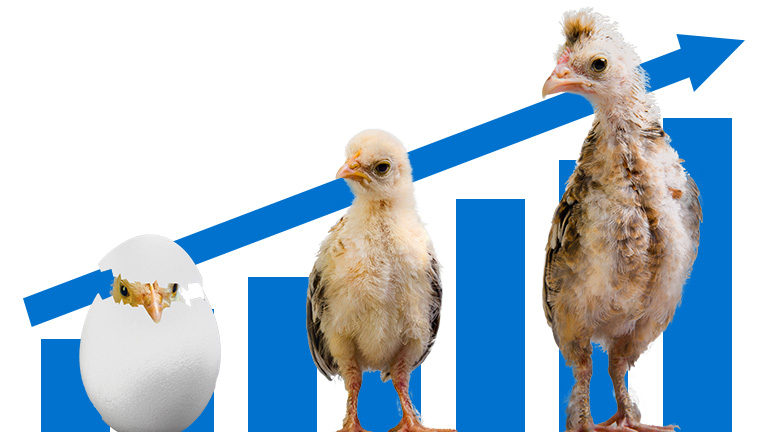
Most broilers today are floor-raised on litter in large structures, which are climate controlled. If there is a sudden cold spell, the system needs to be prepared for adding the right amount of heating power and a system for emergency opening when there is a power loss.
Other requirements on the ventilation system are that it should be able to accommodate a day old chick weighing around 40-45 grams to a fully grown bird of 2,500 grams or more. Suitable temperature and humidity levels in the house vary with the bird’s growing cycle and ambient conditions from the climate zone where the house is built.
All of the above coupled with sufficient feed and water access make the broilers comfortable and healthy, suitable to become food for humans. A healthy, closed indoor environment often means that the grower needs to spend less money on medicine for the birds, a cost saving that we have seen decreased with as much as 40%.
Having stated the above, it is very important to choose an energy efficient and well performing climate control system that fits the production system, and also with the objective for the farmer/ grower to have as low Total Cost of Ownership (TOC) as possible, to increase farm profit.
When meeting a farmer, key focus should be on climate conditions.
The building structure and size are usually pre-defined, setting the framework for the ventilation layout. The next priority is understanding the local climate, average summer and winter temperatures, humidity, and other weather factors.
This data helps configure the control system to react effectively to changes like temperature shifts, humidity, and strong winds. It should also include preset temperature curves tailored to the birds’ growth cycle, from day-old chicks to processing age.
In large broiler houses, achieving uniformity in climate is crucial due to the birds’ free movement. Cold or warm spots cause birds to cluster, leading to stress, fighting, or imbalance. Proper placement of climate equipment, particularly inlets, is essential for even air distribution. When cold air is introduced, it should spread horizontally and mix with warmer air near the ceiling before reaching the birds to prevent disturbances and maintain uniformity. Designing the optimal distance between ceiling inlets ensures correct airflow, and success is evident when birds are uniformly spread throughout the house.
Broiler houses are inherently dusty and greasy, especially nearing the end of a flock cycle. Ventilation equipment must withstand these dirty, acidic conditions and be designed for high-pressure cleaning and disinfection between cycles, as cleaning during a cycle would disrupt the birds.
A second major challenge in floor production systems is maintaining bedding quality. Farmers need bedding (straw, wood shavings, or sand) to stay dry to prevent foot lesions and reduce harmful ammonia levels from wet manure. Effective ventilation and heating, used as needed, are key to keeping bedding dry, which ultimately improves farm economy and animal welfare.
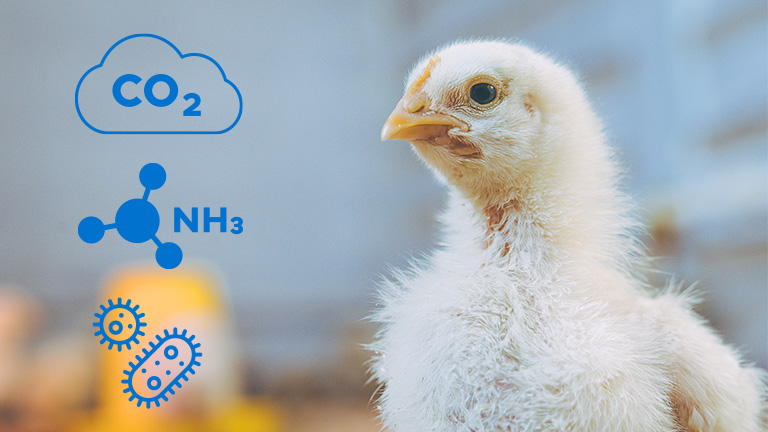
In densely populated areas, ammonia emission restrictions can hinder expansion for growers. This challenge can be effectively addressed using scrubber solutions that “wash” ammonia from the air before release. A significant advancement in this area has been the integration of mist elimination technology, which effectively prevents filter clogging, a common and costly issue. This approach now reduces ammonia emissions by up to 89% on average, with maintenance limited to high-pressure cleaning of the mist eliminators.
The third major challenge is managing heat waves and periods of hot weather, which can severely impact production and increase mortality. Optimal climate conditions for broiler growth and welfare typically involve a temperature range between 18°C and 34°C (depending on age and breed), free from humidity extremes.
Light control presents the fourth climate challenge and is vital for modern poultry farming. Proper light management ensures broilers get sufficient sleep (as recommended by breed suppliers), which is crucial for proper growth and excellent production results. Achieving a “brown out” effect without light spots is necessary, despite the need for ventilation openings. Light filters, drip pans under chimney fans, and deflector disks on ceiling inlets are used to absorb or redirect light, preventing disturbances to the birds’ rest. Configuring the climate system with appropriate products and accessories ensures animal well-being and performance.
Unstable energy supply is the fifth challenge in intensive broiler farming. Climate control systems rely on controllers and actuators for inlets and extraction openings. A robust backup system, linked to the controller, is essential to prevent suffocation during power failures. In such emergencies, inlets and fan dampers automatically open wide, ensuring sufficient natural ventilation.
At the core of each climate control system are controllers that orchestrate equipment. These include silo controllers for feed, and general temperature controllers with CO2 sensors that allow farmers to set temperature curves, manage minimum ventilation, and track historical data.
In today’s highly competitive intensive poultry farming landscape with limited financial margins, safeguarding investments through stable and consistent production is paramount.
GET IN TOUCH

